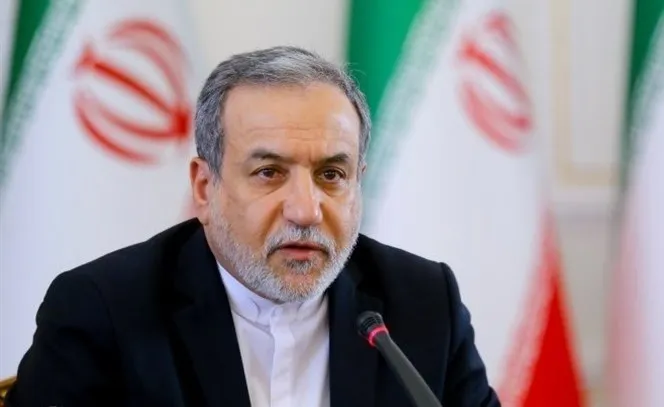
Speaking on the sidelines of a press conference, Araghchi stated that the talks are focused specifically on establishing temporary transit paths. He noted that due to technical complexities, the designation of these provisional routes—based on maps provided by the Iranian armed forces—is approaching its final stages and is expected to yield results soon.
However, Araghchi emphasized that these measures should not be interpreted as a general reopening of the strait. He explained that a complete reopening remains contingent upon other conditions, particularly addressing and remedying violations of the agreement by the United States.
Pointing to Clause 5 of the agreement, which explicitly states that Iran will make the necessary arrangements to reopen the Strait of Hormuz, the Foreign Minister accused American forces of trying to force open alternative routes despite repeated warnings.
Araghchi reaffirmed Tehran’s stance, asserting that Iran will neither tolerate breaches of the accord nor permit any entity to challenge its control and authority over the Strait of Hormuz.
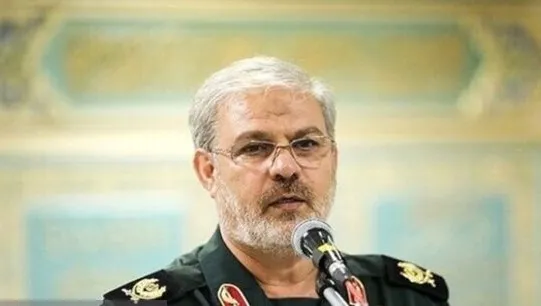
IRGC Spokesperson Brigadier General Mohebbi also emphasized that reopening of the Strait of Hormuz is subject to the specific mechanisms and conditions of Iran and is entirely unrelated to the negotiations between Iran and Oman.
Speaking to reporters in Iran’s southern province of Hormozgan on Saturday, General Hossein Mohebbi addressed the status of the Strait of Hormuz and the requirements for its reopening.
“For us, the Strait of Hormuz is not merely an economic waterway, but rather a key component of our geopolitical and strategic power,” he underlined.
He pointed out that reopening of the Strait of Hormuz depends on the United States fully accepting Iran's conditions and ceasing its interference in regional negotiations; whenever the US accepts Iran's conditions, the Strait of Hormuz will undoubtedly be reopened.
Brigadier General Mohebbi made it clear that the reopening of the strategic waterway has its own legal and defensive mechanisms and is “completely independent” of the negotiation process between Iran and Oman.
The spokesman stressed the strategic importance of the waterway, saying that in the Islamic Republic’s calculations, the Strait of Hormuz is not merely an economic passage and waterway but rather represents the country’s superior geopolitical capacity and power, which is utilized in accordance with Iran’s defense and sovereignty policies.
The IRGC spokesperson said the reopening of the strait is entirely subject to conditions that the Islamic Republic has formally established and communicated. He added that the manner and timing of its reopening directly depend on the extent to which the US accepts those conditions.
Referring to the US obstruction and interference in regional relations, Mohebbi said the enemy must fully accept Iran’s “legal and logical conditions” for the reopening of the transportation routes.
He also said the United States must completely refrain from interfering in ne


